
On this page
Key takeaways
- The post says it combines Bailey's Moving & Storage's own 2024 local move records with USPS change-of-address filings and U.S. Census surveys to rank where people move locally in Colorado and Utah.
- It defines a local move as 50 miles or less, often within the same county, and says the Census found renters nearly three times as likely as homeowners to move locally.
- Its top Colorado local-move destinations are Redlands in the Grand Junction area, Greenwood Village (Denver Tech Center area) and Fruita, and its top Utah destinations are North Salt Lake, downtown Salt Lake City and Draper.
- For timing, the post says spring and early summer are the busiest months in both states, Mondays and midweek days are busiest, and Sundays are quietest, so book early for peak months.
- It adds that hybrid work, housing costs, schools, wildfire risk and commute tradeoffs are shaping local moves, and ends with an FAQ and related reading.
Local moves are dominating the Mountain West in 2025. While national headlines often highlight cross-country migration, the real story is neighborhood-level change. Bailey’s Moving analyzed 500 Colorado local moves and 200 Utah local moves in 2024, combining proprietary data with USPS change-of-address filings and U.S. Census surveys.
Key findings:
- You should book early: 73% of Colorado moves happened April–July.
- Renters are reshaping urban housing markets: Renters were 3x more likely than homeowners to move locally.
- Top inbound destinations for Colorado when moving locally (not including our interstate moves): Denver Tech Center, The Western Slope,
- Hottest Utah neighborhoods: North Salt Lake, Downtown Salt Lake, and Draper.
- Pick your move day with intention: Mondays dominate as the most popular move day, while Sundays remain quiet.
These insights confirm that most families, professionals, and retirees are reshaping life close to home. Whether for better schools, more space, or lifestyle upgrades, local moves tell the real growth story of Colorado and Utah.
Local Moves Are Booming — Here’s Where People Are Going (and Why)
You hear about Americans packing up and leaving states — chasing lower taxes, better weather, or bigger homes. But here’s the truth we see every day at Bailey’s Moving: most people aren’t moving across the country — they’re moving, most likely to rent a home or apartment, across town.
In 2025, local and renting trends are especially pronounced in Colorado and Utah. According to Census data for the last decade, the American West has the lowest rates of homeownership in the country, sitting just under 62%. Western dwellers are more likely to be renters, and 25% of renters still move within one year or less of signing a lease, even though renters are reported to move less now than they did 10 years ago.
What does this data mean for Colorado and Utah? The mobility of renters is reshaping local housing markets in these fast-growing states. We’re seeing renters and homeowners make strategic moves as city affordability tightens and hybrid work grants location flexibility. Whether it's families looking for more yard space or young professionals trading downtown studios for light-rail-accessible suburbs, local migration is driving some of the most dynamic population shifts in the Mountain West.
While headlines may spotlight interstate moves with an emphasis on net in-migration to Denver or Salt Lake City, the real action is happening on a neighborhood level. That’s why we built this guide. In this article, you’ll find:
- Exclusive rankings from Bailey’s Moving on top local move destinations
- Video insights from our crews on the ground
- Localized move resources for accomplishing your upcoming Colorado or Utah move
- A definitive move guide, delivered right to your inbox, to help you plan your own local move
By combining Bailey’s Moving and Storage proprietary move volume data with public migration trends like USPS change-of-address filings and U.S. Census survey data, we’ve created the most accurate local move rankings for 2025 in Colorado and Utah.
How Bailey’s Moving Ranks the Most Popular Local Move Destinations
We handle thousands of local moves each year across Colorado and Utah — giving us a unique window into where people are actually going. To build our 2025 rankings, we analyzed:
- Internal Bailey’s Moving data: anonymized local move volume by ZIP code and county
- USPS change-of-address data: Aggregated ZIP-to-ZIP filings for 2024
- Census mobility trends: Including renter vs. homeowner mobility and metro-area movement rates from 2020-2024
- Seasonal filters: Comparing schoolyear vs. summer peaks
- Geographic thresholds: Limited to moves of 50 miles or less within the same metro region
This multifaceted approach validates what we’re seeing on the ground and ensures our rankings reflect quantitative migration patterns and local context.
“We’ve seen a real swing this year — not away from the state, but toward new corners within it. People are staying local, just recalibrating.”
— Philip Swain, Estimator at Bailey’s Moving
Local Move Activity Overview: Colorado vs. Utah (2024)
When we zoom out to statewide local move volumes, the difference in scale between Colorado and Utah becomes clear — but the trendlines are strikingly similar. Bailey’s Moving tracked:
- 500 local moves within Colorado in 2024
- 200 local moves within Utah in 2024
Both states experienced a sustained push toward suburban areas, mid-sized cities, and lifestyle-oriented neighborhoods. Colorado, however, saw nearly three times the volume.
These patterns mirror the findings from USPS and the U.S. Census Bureau:
- USPS change-of-address filings in 2024 showed the majority of in-state migration concentrated in Douglas, Mesa, and Arapahoe counties in Colorado, and in Salt Lake, Utah, and Davis counties in Utah.
- According to the 2024 U.S. Census Current Population Survey, 8.6% of Coloradans and 10.4% of Utah residents moved locally within the year. Notably, renters were nearly 3x more likely to move than homeowners, contributing significantly to these volumes.
The trend is clear: Most Americans are moving nearby, not far away. From Grand Junction to Greenwood Village and from North Salt Lake to Sugar House, people are prioritizing their commute, cost, and community.
How We Define a Local Move — "Local moves are typically 50 miles or less, often within the same county. Whether it’s a studio apartment on the 10th floor or a four-bedroom single-family home, we define “local” by distance — not difficulty."
2024’s Top Inbound Cities: Where People Are Moving Locally in Colorado and Utah
We compiled and compared data from three distinct sources to better understand where people are relocating within Colorado and Utah: Bailey’s Moving and Storage internal move records, USPS change-of-address filings, and U.S. Census Bureau mobility surveys. The following charts illustrate how closely these datasets align, for a clear picture of the most in-demand neighborhoods for local moves. The raw numbers and trend insights show who’s moving — with renters, remote workers, and growing families driving much of the activity.
Top Inbound Cities in Colorado for Local Moves (2024 Bailey’s Moving Data)
- Redlands
- Denver Tech Center (Greenwood Village / Centennial / Denver)
- Fruita
- Littleton
- Parker
- Monument
- Castle Rock
- Grand Junction
- Highlands Ranch
- Palisade
Census Insight: According to the U.S. Census Bureau, 8.6% of Coloradans and 10.4% of Utah residents moved locally in 2024. Renters were three times more likely to move than homeowners.
Top Inbound Cities in Utah for Local Moves (2024 Bailey’s Moving Data)
- North Salt Lake
- Salt Lake City (Downtown)
- Draper
- Lehi
- Holladay
- St. George
- Sugar House
- Bountiful
- Farmington
- East Millcreek
USPS Insight: The highest ZIP-to-ZIP change-of-address activity aligned with areas we see high Bailey’s Moving and Storage move volume — confirming top hotspots in Salt Lake, Lehi, Draper, Grand Junction, and Castle Rock. Source: USPS change-of-address dashboard, 2024)
External migration data backs up rankings. In Utah, recent reports highlight Provo–Orem, Ogden–Clearfield, and the greater Salt Lake City metro as key inbound growth zones. In Colorado, reports on Denver metro counties like Douglas, Arapahoe, and Mesa continue to attract local movers — consistent with what we’re seeing in Bailey’s Moving 2024 booking volumes.
Top Local Move Destinations in Colorado (2025)
Based on our 2024 data, these are the Colorado cities and neighborhoods seeing the highest number of incoming local moves:
1. Redlands (Grand Junction area)
Why People Are Moving Here: Scenic living, large lots, and quick access to trails and Colorado National Monument.
Popular Attractions:
- Colorado National Monument– Iconic red rock canyons and mesa views
- Lunch Loops Trail System – Beloved by mountain bikers
- Redlands Mesa Golf Course – Award-winning golf with stunning desert vistas
- Connected Lakes State Park – Fishing, kayaking, and wildlife viewing
- Serpents Trail – Historic hiking route with panoramic overlooks
2. Greenwood Village (Denver Tech Center area)
Why People Are Moving Here: Close to tech employers, light rail, and top-rated Cherry Creek schools.
Popular Attractions:
- Marjorie Perry Nature Preserve – Quiet trails and wetlands near residential neighborhoods
- The Landmark Entertainment District – Restaurants, movie theaters, and boutique shops
- Fiddler’s Green Amphitheatre – One of Colorado’s largest outdoor music venues
- Cherry Creek State Park (nearby) – Boating, trails, and off-leash dog area
- Greenwood Athletic Club – Upscale fitness and wellness center
3. Fruita
Why People Are Moving Here: Affordable alternative to Grand Junction with a family-friendly small-town feel.
Popular Attractions:
- Dinosaur Journey Museum – Fossils, animatronics, and real paleontology digs
- Kokopelli Trail System – Epic biking and hiking trails through canyon country
- Colorado Riverfront Trail – Scenic access for walking and cycling
- James M. Robb – Colorado River State Park – Camping, boating, and paddleboarding
- Downtown Fruita – Local shops, farmers markets, and seasonal festivals
Top Local Move Destinations in Utah (2025)
Not sure where to move within Utah in 2025? From Salt Lake City to emerging suburbs along the Wasatch Front, three communities are attracting the highest volume of in-state movers this year. These are the most popular Utah moving destinations based on Bailey’s Moving local relocation data.
1. North Salt Lake
Why People Are Moving Here: Fast-growing community with easy I-15 access and scenic mountain views.
Popular Attractions:
- Tunnel Springs Park – Rolling hills, wildlife, and iconic photo ops
- Eaglewood Loop Trail – Great for mountain biking and hiking
- Eaglewood Golf Course – Popular local course with panoramic views
- Foxboro Marketplace – Shopping and dining hub
- Legacy Parkway Trail – Multi-use path great for walking or biking
2. Salt Lake City (Downtown)
Why People Are Moving Here: Walkable lifestyle, entertainment, and a wave of new apartment developments.
Popular Attractions:
- Temple Square – Historic and cultural center of the city
- Abravenal Hall – Broadway shows, concerts, and performances
- Downtown Beer Bar & Food Halls – Vibrant nightlife and dining
- Utah Museum of Contemporary Art (UMOCA)
- City Creek Center – Upscale open-air shopping mall
3. Draper
Why People Are Moving Here: Tech jobs, top-rated schools, and family-friendly neighborhoods.
Popular Attractions:
- Draper Cycle Park – BMX tracks and mountain biking trails
- Flight Park State Recreation Area – Hang gliding and paragliding hotspot
- Draper City Park – Community events and playgrounds
- The Loveland Living Planet Aquarium (nearby in Sandy)
- Shops at South Town Shopping Center – Local retail and dining
Seasonal Trends for Local Moves in Colorado and Utah
Timing can make a big difference when it comes to planning a local move. Bailey’s Moving data shows clear seasonal peaks in both Colorado and Utah, with spring and early summer dominating move activity. Understanding these patterns can help you avoid congestion, book crews more easily, and even save money by picking the right time of year.
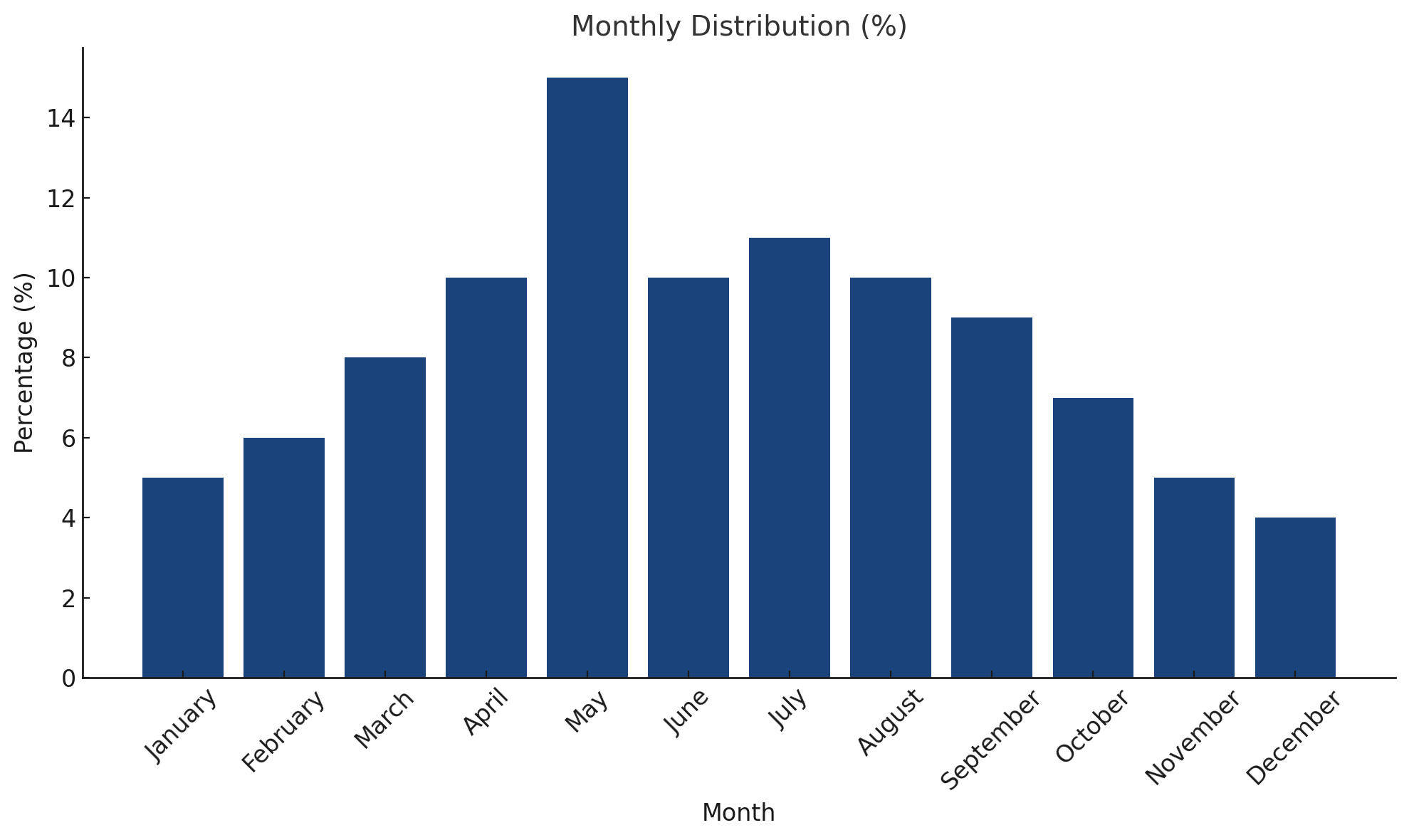
Colorado Seasonal Moving Trends
Local moving activity in Colorado climbs steadily from winter into late spring, peaking in May (73 moves). June (52) and July (53) also remain busy, reflecting the family-friendly summer window between school years. Demand tapers off after August, with the lightest activity in November (23 moves) and December (18 moves).
Key takeaway: Colorado’s hottest moving season is April–July, making early booking essential for those months. Late fall and winter off-peak times often provide better truck availability and more flexible scheduling.
- January: 5%
- February: 6%
- March: 8%
- April: 10%
- May: 15% (peak)
- June: 10%
- July: 11%
- August: 10%
- September: 9%
- October: 7%
- November: 5%
- December: 4%
Utah Seasonal Moving Trends
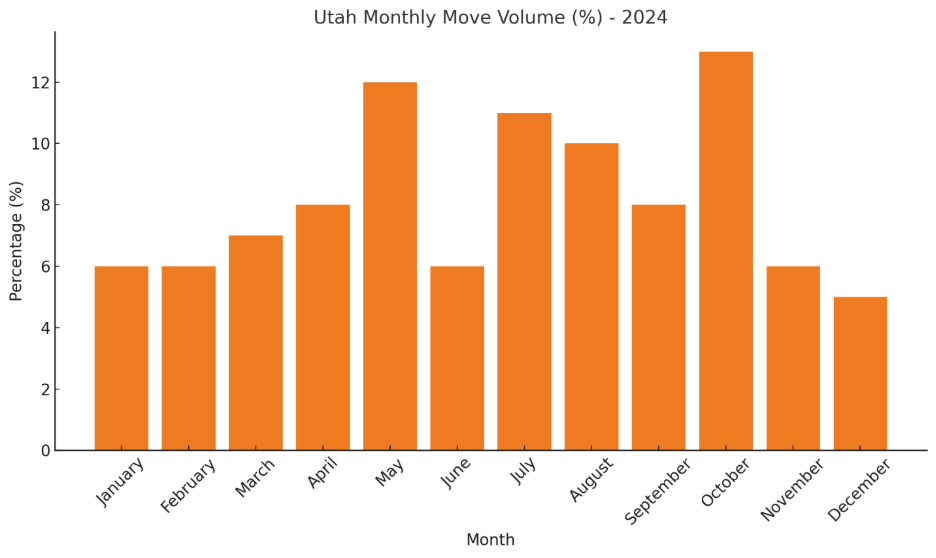
Utah’s local move data shows more moderate peaks but follows a similar rhythm. Activity is strongest in May (23 moves), July (21 moves), and October (24 moves). Winter months (December and January, both under 12 moves) remain the quietest period.
Key takeaway: Utah residents tend to move around late spring and mid-fall, with a secondary bump in midsummer. Movers looking for scheduling availability should aim for January–March or November–December.
- January: 6%
- February: 6%
- March: 7%
- April: 8%
- May: 12% (peak)
- June: 6%
- July: 11%
- August: 10%
- September: 8%
- October: 13% (peak)
- November: 6%
- December: 5%
Best Days of the Week to Move Locally in Colorado and Utah
When planning a local move, the day of the week can be just as important as the month. Bailey’s Moving data shows that Mondays and midweek days dominate moving activity, while weekends — especially Sundays — are far less common. Choosing a less popular moving day can open the moving company’s calendar, increasing truck and crew availability. Less competition for calendar space eases some of the timing pressure. When you call to book your move for a Saturday or Sunday, your top-date choice is more likely to be open. Keep in mind, however, that most movers don’t move on Sundays, though there are exceptions.
Colorado Moving Trends by Day of the Week
In Colorado, Mondays (125 moves) lead the pack, with Wednesdays, Thursdays, and Fridays tied close behind at 86 moves each. Tuesdays are somewhat lighter at 69 moves, while weekends are much quieter — Saturdays (41 moves) and Sundays (6 moves) see the least demand.
Key takeaway: Movers in Colorado clearly prefer starting the week strong. If you want more crew availability, Sundays are the quietest, followed by Saturdays.
Colorado Weekly Move Volume (2024)
- Monday: 25%
- Tuesday: 14%
- Wednesday: 17%
- Thursday: 17%
- Friday: 17%
- Saturday: 8%
- Sunday: 1%
Utah Moving Trends by Day of the Week
Utah’s patterns follow a similar rhythm, with moves clustered at the start and middle of the week. Wednesdays (39 moves) and Mondays (38 moves) are busiest, followed by Tuesdays (33). Fridays and Thursdays are slightly quieter, while weekends again trail off, with Sundays (7 moves) and Saturdays (13 moves) at the bottom.
Key takeaway: In Utah, early- to midweek days dominate, while weekends remain the least busy.
Utah Weekly Move Volume (2024)
- Monday: 20%
- Tuesday: 18%
- Wednesday: 21%
- Thursday: 15%
- Friday: 16%
- Saturday: 7%
- Sunday: 4%
Combined Colorado + Utah Moving Trends
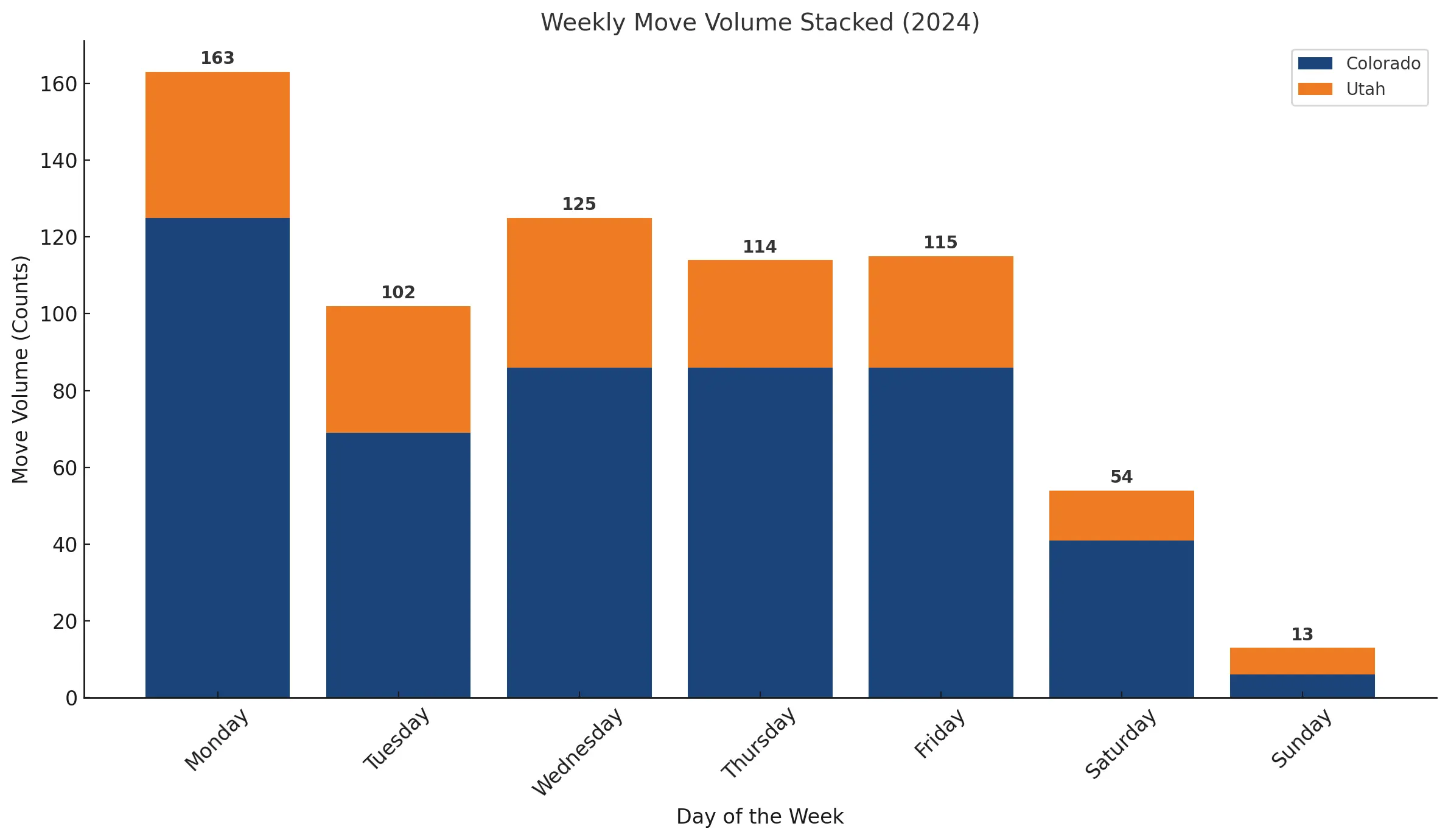
Looking across both states, the combined data shows Mondays (163 moves) are the busiest moving day of the week, followed by Wednesdays (125 moves) and Fridays (115 moves). Weekends account for only a small share of moves overall, with just 13 moves on Sundays across both states.
Combined Weekly Move Volume for Colorado and Utah (2024)
- Monday: 24%
- Tuesday: 15%
- Wednesday: 18%
- Thursday: 17%
- Friday: 17%
- Saturday: 8%
- Sunday: 2%
Which Migration Patterns in Colorado and Utah Are Driving Local Moves in 2025?
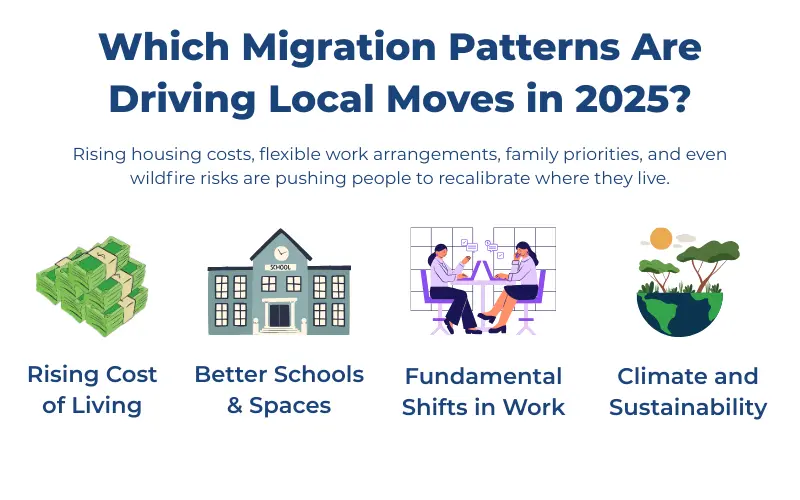
A mix of economic pressures, lifestyle preferences, and environmental realities are shaping local moves across Colorado and Utah in 2025. Rising housing costs, flexible work arrangements, family priorities, and even wildfire risks are pushing people to recalibrate where they live. Together, these factors explain why movers are trading downtown condos for suburban homes, seeking better schools and green space, or balancing commute times with affordability and safety.
Changes in Remote & Hybrid Work Is Reshaping Local Moves in Colorado and Utah
Over the past few years, remote work briefly expanded people’s housing choices—but that chapter is closing fast. Fully remote roles are now harder to find, and hybrid schedules are pulling many employees back toward their work centers. In Colorado and Utah, that means fewer long-distance “lifestyle” moves and more practical decisions: families and individuals are searching for homes that keep them within a manageable commute while still offering relief from high housing costs. Our move data shows that local patterns are less about spreading outward and more about recalibrating—finding a balance between affordability, proximity to work, and quality of life. For some, that means trading one suburb for another; for others, it means staying put altogether when the math doesn’t work.
Mobility data shows a “better bang for buck” mindset. Moving today seems less about changing states with the flexibility of 2020, and more about relocating within metro areas to find more houses for less money and an affordable but comfortable lifestyle unless changing states is feasible for work.
Rising Cost of Living Is Driving Local Relocation in Colorado and Utah
Rising housing costs are one of the strongest levers pushing local moves. In Colorado, for example, median home prices are well above national averages, and housing is a larger share of monthly expenses for many households. Renters and homeowners facing steep property taxes, utility bills, or grocery costs frequently look for neighborhoods with more space or value, even if it means a longer commute.
Families Moving for Better Schools and Green Space in Utah and Colorado
For families, school quality and access to parks, open space, trails, and a more “outdoor lifestyle” are increasingly deciding factors. As inner-city housing grows more expensive or constrained, families are choosing areas with better schools, more yards, less congestion, and more proximity to nature even if that entails commuting. These preferences are reshaping growth: suburban school districts just outside big metro areas are growing faster, and places that combine walkability with green space are becoming more popular.
Climate, Sustainability, and Wildfire Risk Are Influencing Moves in Colorado and Utah
Environmental risks are increasingly a factor, helping people in Colorado decide where to live. According to the 2022 Colorado Wildfire Risk Assessment, roughly one million Coloradans reside in areas judged to have elevated wildfire risk. In Boulder and Larimer Counties, researchers found that residents in wildland-urban interface (WUI) zones reported intents to move locally in response to wildfire perception — often preferring shorter moves rather than leaving the region altogether. Meanwhile, land-use planning reports show that although mitigation (fuel reduction, home hardening) is fairly common, broader regulatory or community-scale adaptations (rezoning, stricter building codes) lag. This mismatch further motivates some people to relocate to neighborhoods with lower risk exposure.
In Utah, wildfire seasons have become noticeably longer, with hotter, drier, and windier conditions fueling more severe burns. These realities are raising awareness about location-specific risks, and more movers consider air quality, water availability, and community resilience in their decision.
Commute Tradeoffs: Why Utah and Colorado Movers Choose Suburbs and Exurbs
In Utah, commuting data supports the trend that people are willing to tolerate longer travel in exchange for better housing affordability, neighborhood amenities, and space. The 2023 Utah Moves Transportation Survey data from over 11,000 households shows that many respondents living in metro fringe or suburbs accept longer commute distances if transit or highway access is good and housing is more attractive.
Frequently Asked Questions About Local Moves
Bailey’s Moving handles thousands of moves across Colorado and Utah each year, so we hear the same questions repeatedly. Here are the answers to the most common ones, along with helpful resources from our blog.
What are the most popular neighborhoods people are moving to in Colorado in 2025?
According to Bailey’s Moving and Storage’s local move data, neighborhoods like Redlands, Greenwood Village, and Fruita are leading the list of inbound destinations in 2025. These areas offer a mix of affordability, lifestyle amenities, and family-friendly communities.
How do I find out if I need a parking permit to move locally in Utah?
Many Utah cities require permits for moving trucks, especially in downtown or high-density neighborhoods. Always check with your city’s transportation office or HOA.
Is it better to move locally during the week or weekend?
Weekdays dominate move volume — especially Mondays, Wednesdays, and Fridays in both Colorado and Utah. Sundays are the lightest day, making them an option if you’re looking for less competition and more availability. However, not all moving companies are open on Sundays.
What is considered a local move in Utah or Colorado?
Bailey’s Moving and Storage defines a local move as anything under 50 miles, often within the same county or metro area. Distance, not difficulty, is what makes a move “local.” Learn more on our Local Moving page. See what moving is like with Bailey’s Moving.
What should I know before requesting a local moving quote?
Be ready to provide details about your home, the items you need to move, access challenges (stairs, elevators, tight hallways), and the timing of your move. Estimates should include written or virtual/in-home walkthroughs. Learn more in What You Need to Know About Getting a Move Price Estimate.
What does “full-service moving” entail?
Full-service moving means the mover handles all aspects: packing, loading, transporting, unloading, basic furniture disassembly/reassembly, and sometimes storage. For details, read What Moving Day Actually Looks Like With Bailey's Moving
Do local moving rates change based on season or move-day timing?
Bailey’s Moving local move rates stay consistent year-round, even during winter. However, peak months (spring and early summer) and busy weekdays can book up fast. See Your Local Move Questions Answered for insider tips.
What sort of documentation should I expect for my move?
Important documents include your written estimate, itemized inventory, bill of lading, and any contracts or waiver forms. For a full breakdown, visit An In-Depth Guide to the Documents of Your Move.
How can I get the cheapest local move possible?
Declutter before packing, handle your own packing, schedule during off-peak days, and get multiple quotes. For proven strategies, read Top 3 Tips On the Cheapest Way to Accomplish a Local Move.
How do I avoid moving scams?
Watch out for high deposits, vague estimates, unlicensed movers, or companies that broker your move without transparency. For red flags, see 5 Questions You Can Ask to Determine if a Mover is Trying to Scam You.
Resources & Related Reading for Local Moving
Moving Help Resources: Guides, Checklists & Tips
- Moving Apartments in Colorado and Utah: A Step-By-Step Guide
- Reduce Local Moving Costs: How to Save Money on a Move in Colorado or Utah
- Planning a Move to Denver, CO? Here Are Some Key Things to Know
- Moved to Salt Lake City, UT, and Not Quite Ready to Unpack? Here’s 10 Things to Do Instead
- Featured Story: Protect Yourself: A Complete Guide to Spotting and Avoiding Moving Scams
Get the Definitive Move Guide in Your Inbox
Moving doesn’t have to feel like a maze of checklists and deadlines. That’s why Bailey’s Moving built the Definitive Move Guide, an email series that walks you through every stage of the process — from the first decision to relocate, all the way through moving day and settling in. Each installment drops right into your inbox with practical steps, reminders, and expert insights tailored to keep your move organized and stress-free.
Are you DIY moving all the way, hiring a professional company, or somewhere in the middle? Find everything from creating a timeline, budgeting, and decluttering strategies, to packing tips, moving-day prep, and time saving tips once you’ve arrived at your new home. Think of it as your personal roadmap — a trusted resource that guides you from start to finish so nothing falls through the cracks.
Summary & Next Steps
Local moves in Colorado and Utah tell a powerful story in 2025: People aren’t leaving the Mountain West; they’re reshaping it from within. From Redlands and Greenwood Village to Draper and North Salt Lake, families, renters, and professionals are choosing neighborhoods that offer more value, better schools, and stronger community connections. Seasonal peaks in spring and summer, weekday moving surges, and environmental factors like wildfire risk reveal how personal priorities are driving neighborhood-level migration.
For anyone planning a move in 2025, this data confirms one thing: local moves dominate. By understanding when and where your neighbors are relocating, you can better prepare, save money, and reduce stress. Bailey’s Moving brings decades of local expertise to help you navigate Colorado and Utah’s unique moving landscapes.
Ready to make your move? Whether you’re headed to downtown Salt Lake, suburban Greenwood Village, or a family-friendly neighborhood in Grand Junction, Bailey’s Moving is here to help. Request your free moving estimate today and take the first step toward a smoother, smarter local move.
Frequently Asked Questions
What are the most popular neighborhoods people are moving to in Colorado?
According to the post's local move data, Redlands, Greenwood Village and Fruita lead the list of inbound destinations. Check the post for the full top-10 list.
How do I find out if I need a parking permit to move locally in Utah?
The post says many Utah cities require permits for moving trucks, especially in downtown or dense neighborhoods. Check with your city's transportation office or HOA.
Is it better to move locally during the week or the weekend?
The post says weekdays dominate move volume, with Sundays the lightest day. It also notes that not all moving companies are open on Sundays.
What is considered a local move in Utah or Colorado?
The post says Bailey's Moving & Storage defines a local move as anything under 50 miles, often within the same county or metro area.
What should I know before requesting a local moving quote?
Be ready to describe your home, the items you are moving, access challenges such as stairs and elevators, and your timing. Ask whether the estimate comes from a written, virtual or in-home walkthrough.
What does full-service moving include?
The post says the mover handles packing, loading, transporting, unloading, basic furniture disassembly and reassembly, and sometimes storage.
Ready to find out what your move should cost? Get Pricing or call 888-260-5717.


