

On this page
Key takeaways
- The post defines a fixer-upper as a for-sale property that needs repairs before it meets all of a buyer's needs, and says some are livable during repairs while others lack essentials like plumbing or electricity.
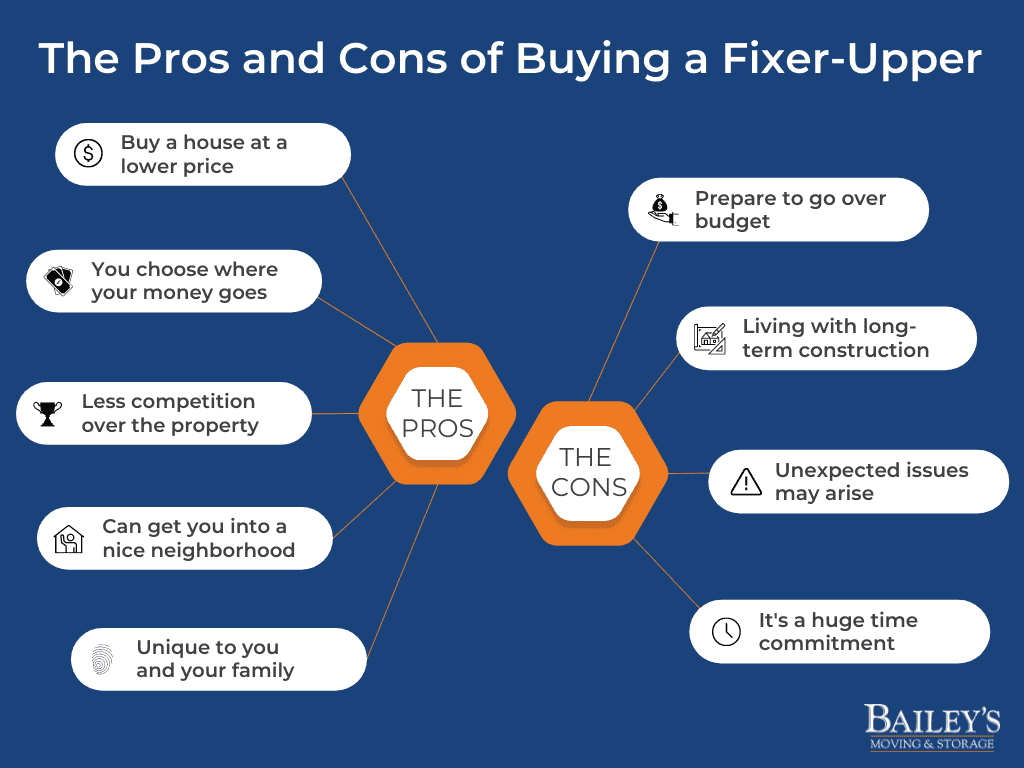
- It lists the pros as a lower purchase price, control over where your money goes, less buyer competition, a path into a nicer neighborhood and a home that is unique to you.
- It lists the cons as likely going over budget in money and time, living with long-term construction, unexpected problems such as mold, pests, asbestos or lead, and a large time commitment.
- The post says most fixer-uppers are sold as-is and the true condition is usually not revealed until construction begins.
- It concludes a fixer-upper is worth it if you are willing to put in the time and finances, and says you should consider your budget, time, tolerance for ongoing construction and willingness to handle surprises.
Investing in a fixer-upper seems extremely opportunistic at first: you buy a home for a lower price and get to customize it with your leftover funds however you want. You’re improving the property value while paying bargain prices.
However, fixer-uppers often come with more challenges than meets the eye. That’s why it’s important that you carefully evaluate the pros and cons of buying a fixer-upper before deciding to invest in one. Consider the following pros and cons of buying a fixer-upper while making your upcoming real-estate decision.
What Is Considered a Fixer-Upper?
A fixer-upper is defined as a for-sale property that requires repairs before it can address 100% of a buyer’s needs and wants. Most fixer-uppers can be lived in while repairs are being conducted, but some are sold without essentials like plumbing, electricity, and more.
Fixer-uppers are often purchased by buyers who are looking to maximize their return on investment (or ROI). There is some risk associated with purchasing a fixer-upper, as the true condition of the home usually isn’t revealed until construction begins. But, a fixer-upper is a great option for those who want to design a house without paying astronomical prices.
The Pros of Investing in a Fixer-Upper
Though there is some risk involved, investing in a fixer-upper comes with a lot of pros that are attractive to buyers:
You’re Buying a House at a Lower Purchase Price
You can buy a home for lower cost and often start living in it before fixing up the house. This is a great option for first-time buyers or house flippers who want to buy a home for less than what they typically sell for.
You Get to Choose Where Your Money Goes
When you purchase a move-in ready home, you’re paying one price for a finished home. With fixer-uppers, you can choose where to invest your money. So, you can spend more on well-traveled areas of your home, like the living room or kitchen, and save on smaller details like bedrooms and bathrooms.
There’s Less Competition Vying for the Same Property
With the real estate market in a constant state of flux, competition over homes is likely to occur. This is especially the case for first-time homebuyers, as they’re more likely to be passed on for all-cash offers or investors with a history of home purchases. Buying a fixer-upper typically comes with less competition. You can secure a home for less and make it entirely your own without elbowing your way to the forefront of dozens of buyers.
Do keep in mind that the market does transform, and competition for homes may be more intense at times, even for fixer-uppers. If you’re having difficulty getting your offer accepted on a home, stay patient and keep putting in those offers.
A Fixer-Upper Can Get You into a Nicer Neighborhood
A great way to get into a nice neighborhood without paying those nice neighborhood prices is securing a fixer-upper in the neighborhood of your choice. As you make improvements to your home, the resale value will begin to match or exceed the homes surrounding you. Additionally, you’ll be in a neighborhood that you really value.
Your Home Will be Unique to You and Your Family
The final pro of investing in a fixer-upper is that you get to build a home that is entirely unique to you and your family. Instead of buying a pricey, move-in ready home that you and your family learn to grow into, a fixer-upper can be designed to fit your unique situation.
The Cons of Investing in a Fixer-Upper
Though there are many pros to investing in a fixer-upper, there are key cons to consider before talking with your realtor.
Prepare to Go Over Budget
Though the purchase price of a fixer-upper is lower than most move-in ready homes, you’re going to be putting in a lot of money into repairs and upgrades for the home. This is where spending can really ramp up quickly if you’re not careful.
Though budgeting is a great tool to help you understand what you’re going to spend, you’re likely to go over budget in both money and time. Delays can happen, and you’ll discover more projects and additions to your home as time goes on.
You’ll Be Living with Long-Term Construction
Some people are fortunate enough to buy a fixer-upper and not have to live in it. Usually, they’re still in a rental property, living with relatives or friends, or living in a home they previously purchased.
But most people who buy fixer-uppers do so because it can save them money in the long run by living in the property while they fix it up. While living in a construction zone may seem like no big deal for a short while, keep in mind that most fixer-uppers take anywhere from 2-5 years to complete. Sometimes they can take nearly 10 years to finish, depending on what the house needs and what the owners want.
Living in a construction zone long term can be taxing on sleep and your ability to relax. Keep in mind that you’ll have to sacrifice your comfort in the beginning while building your dream home.
Unexpected Issues May Arise that Require More Time and Money
Unexpected issues go hand in hand with going over budget. Most fixer-upper homes are sold as-is, and many hold secrets just below the floorboards and beyond the drywall. As you begin the process of making essential repairs and upgrades, be mindful of the fact that you will likely reveal more issues with the home that weren’t visible to the naked eye. Often this includes mold, pest issues, asbestos or lead in older homes, and outdated wiring.
A Fixer-Upper is a Huge Time Commitment
Beyond all the surprise repairs and budgeting constraints, keep in mind that buying a fixer-upper is going to alter your life for the next few years. You’re going to be putting in countless hours either working with a contractor or fixing your space. Your fixer-upper is going to become your new hobby.
Ultimately, Fixer-Uppers Are Worth it if You’re Willing to Put in the Time and Finances
Investing in a fixer-upper is a great option if you know what you’re up against. It’s a great choice for an investment and is your key to designing and building the home you really want in a location you really love.
However, understand that it’s going to cost a lot of time and money to get your home where you want it to be. And the fixer-upper you choose is going to be a long-term commitment that drastically changes your day-to-day life for at least a couple of years.
For more information and tips on homebuying, check out our blog. You can also check out our YouTube channel for insider tips and tricks on all things moving, transportation, and real estate.
Frequently Asked Questions
What is considered a fixer-upper?
A property that needs repairs before it meets a buyer's needs. Some can be lived in during repairs and others lack essentials like plumbing or electricity.
What are the pros of buying a fixer-upper?
A lower purchase price, control over renovation spending, less competition, a chance at a nicer neighborhood and a home designed around your family.
What are the cons of buying a fixer-upper?
Budget and timeline overruns, long-term construction, hidden problems like mold, pests, asbestos or lead, and a big time commitment.
How can I decide if a fixer-upper is right for me?
Consider your budget, available time, tolerance for ongoing construction and willingness to handle surprises. Get a professional inspection and talk with your realtor.
How does a renovation affect moving?
If you plan to live in the house during repairs, see the post on moving into a house you are renovating for tips on staging your move.
Ready to find out what your move should cost? Get Pricing or call 888-260-5717.


