
On this page
The short answer: Renting a U-Haul is usually cheaper than hiring movers in cash, especially for a studio or 1-bedroom on a short local move. Once you pay for loading help, supplies and a day off work, a Denver 2–3 bedroom DIY move runs roughly $1,000 to $1,500, while Bailey's Moving & Storage's typical local totals are $1,100 to $1,800, so for bigger homes the gap can nearly close.
You've probably got two numbers open right now. One is a U-Haul rate that starts at $19.95. The other is a moving quote with a lot more digits. It's a fair question: what does the small number leave out?
We're Bailey's Moving & Storage, and we've moved Colorado families since 1952. You might expect a moving company to tell you to hire movers. We won't, because sometimes the truck really is the right call. What we can do is walk you through the whole weekend, dollar by dollar, so you can see which number is really smaller for your move.
What does the $19.95 truck rate leave out?
The weekend starts at the U-Haul counter, and that's where the first surprise shows up. The $19.95 is for the smallest truck, a 10-foot that fits a small apartment. A 2-bedroom home usually needs the 20-foot at $39.95, and a 3-bedroom the 26-foot at $49.95. Each one is billed by the mile on top. When we priced a Denver pickup for Tuesday, Oct. 20, U-Haul quoted $0.99 a mile on every size, and a small fee pushed the 10-foot's day rate to $22.15. Your own quote will vary by date and location.

Then come the miles you didn't plan on. There's the drive to pick up the truck, the loaded run across town, maybe a second run when the couch doesn't fit, and the drive back. Every mile counts twice, once on the meter and again at the pump, and these trucks get about 8 to 12 miles per gallon with Denver regular near $4.18 a gallon. Bring it back under a quarter tank and U-Haul adds a $30 fee.
The counter adds a few more lines before you leave: a $1-a-day environmental fee, Colorado's $5.57 daily rental fee (July 2026–June 2027) and Denver's short-term car rental tax (11.25% combined) plus general sales tax (9.15% combined) on taxable supplies. Then there's the damage coverage question. U-Haul's Safemove is optional protection for the rental truck: a damage waiver for most accident damage to the equipment (including many overhead and tire claims), cargo protection for loss or damage from collision, fire, windstorm or overturn, and medical/life protection for you and passengers in the cab (verified on U-Haul's Damage Coverage page, Oct 13, 2026; subject to exclusions; not liability insurance). Prices vary by city and truck size, so ask when you reserve. Skip it, and U-Haul says you can owe up to the truck's full replacement value. Don't count on your credit card or auto policy to step in; U-Haul says most cards don't cover its trucks and many auto policies may not.
Before the first box goes in, you'll want a dolly ($7 to rent), furniture pads (from $5 per half dozen) and boxes. U-Haul's kits run $151.47 for an apartment, $310.01 for a 1–2 bedroom and $453.34 for a 3–4 bedroom, plus Denver sales tax. Packing materials, not the truck, are often the biggest line on the bill.
If you live on a busy street, the truck needs somewhere to park. Denver requires a permit to leave a moving truck on the street, and the city asks for meter-bag requests at least a week ahead. Trucks over 22 feet are generally limited to two hours of on-street parking.
Saturday is the lifting. The first floor goes fine. The second flight of stairs is where a DIY move starts to feel expensive. Friends get tired, someone tweaks a back, and a helper who promised to come sends a text instead. If you pay for loading help, Denver's going rate on TaskRabbit is around $56 an hour per helper.
Shopping around helps a little, but not much. Penske and Budget quoted the same $0.99 a mile on their smaller Denver trucks the same day, with daily rates of $19.99 to $29.99 and damage protection packages starting around $35 to $55 a day.
Sunday you unload, refuel, and get the truck back on time. If Friday was a packing day, you may have taken it off work, and that counts too.
Added up, a cheap truck is rarely a cheap weekend. Sometimes people find that out an hour into loading.
What happens when a DIY move goes sideways?
Corey Oliver, a relocation consultant at Bailey's Moving & Storage, has watched it happen. "I actually had a customer decide to rent a U-Haul because he thought he could save money by doing the move himself," he says. "About an hour into loading the truck, he realized how much work it was and called us to come help load it."
That customer ended up paying for both: the truck he'd already rented and the crew he called in. Between the two, he spent more than if he'd hired movers from the start. "By the time you pay for the rental truck, fuel, and food for everyone helping," Corey says, "the cost of moving yourself can add up pretty quickly."
About an hour into loading the truck, he realized how much work it was and called us to come help load it.
So if paying for help is where so many DIY moves end up anyway, it's worth knowing exactly what a mover's bigger number buys.
What are you actually paying a mover for?
At Bailey's Moving & Storage, a standard local move includes the truck and the fuel, with no separate mileage charge. It includes a trained crew, plus the dollies, furniture pads and protective wrap they use on every job, whatever the size of your home. The crew loads, drives and unloads into the right rooms. Most bulky furniture, and even many safes, fit in the normal price. Extra charges come in only for something extremely heavy or that needs special handling, and for items like exercise equipment that has to be taken apart, we bring in a specialist so it goes back together right.
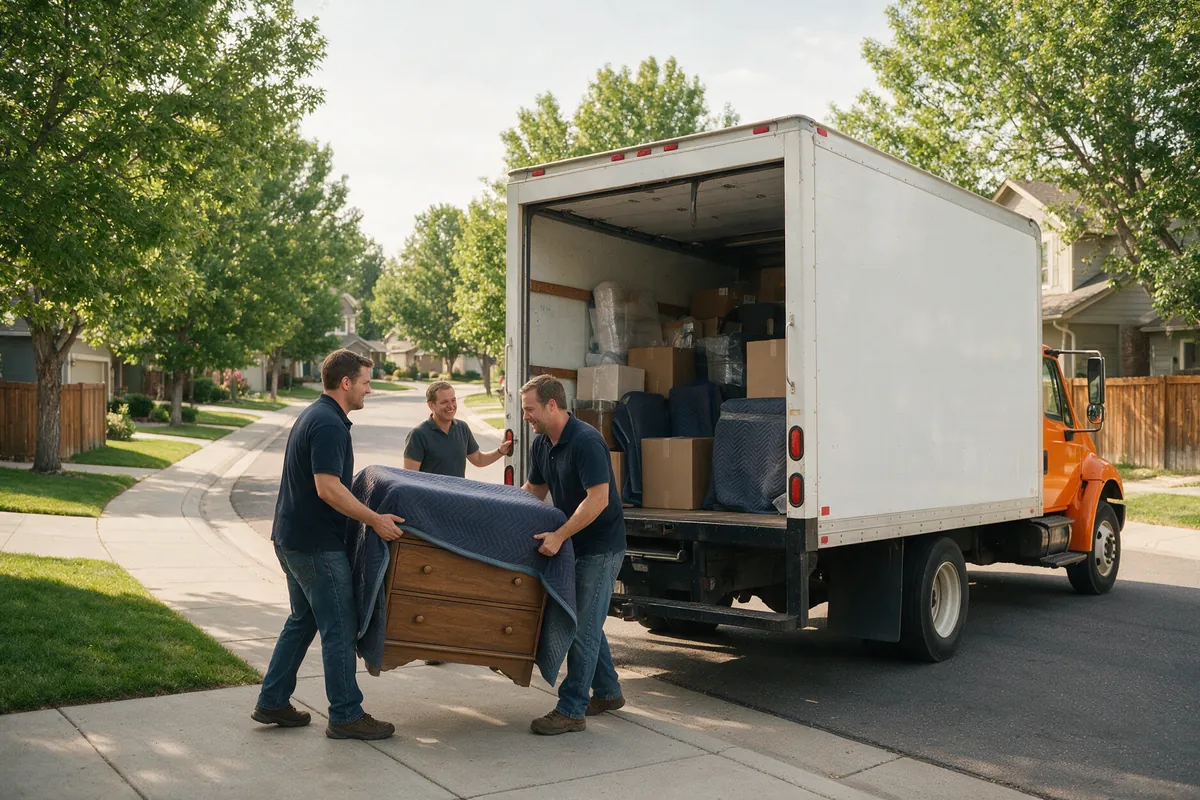
Local moves are most commonly billed by the hour, with the clock running from when the crew leaves our warehouse until they return. Moves over 50 miles are priced by weight and miles, or with a binding price based on the inventory in your contract. Boxes and packing are extra, and you can save by packing yourself.
You're also paying for protection, and it is not free. If you don't choose a level, you're opted in to Full Value Protection, our name for full coverage. It's priced per pound by the weight of your shipment, and typical estimates for valuation (Full Value Protection) run about $250–$450. If the crew damages something, eligible items are typically repaired or replaced with comparable new items under the terms of your valuation agreement. The cheaper option, released value, pays just $0.60 per pound per article, so a 25-pound TV is worth $15. Ask whether protection is already in the total you were quoted, and get it in writing.
The last thing you're paying for is accountability. Bailey's Moving & Storage is a carrier, not a broker: the company that quotes your move is the company that shows up, with its own trucks and its own crews. If something goes wrong, you know exactly who to call. That's why a family might still choose us when a cheaper option is on the table: the price in writing, the crew we employ, and the protection behind them.
Bailey's Moving & Storage is also an agent for Allied Van Lines, so if a local move ever turns into a long-distance one, the same company can plan it through a national network.
For a closer look at how a local mover builds a price, see our guide to what a local move in Denver really costs.
Still, not everyone needs the whole package. Plenty of people are happy to drive the truck; it's the carrying they'd rather hand off.
Is there a middle path between DIY and full service?
There is, and it's often the best value. In a hybrid move, you rent the truck and drive it yourself, and professionals do the heavy lifting. Driving across town isn't the hard part. Carrying a couch down three flights of stairs is.
Bailey's Moving & Storage will load or unload your own rental truck, trailer or other vehicle, billed hourly just like our standard local moves. We can also send a crew just to pack. You could also pack everything yourself and hire a full crew for moving day, or load a portable container with hired help. For a Colorado take on these options, read how to move cheaper and still get the perks of a moving company.
A hybrid has tradeoffs. You still drive a big truck through Denver traffic and coordinate more than one company, and if something breaks, it can be hard to say whose fault it was. Whoever you hire, get the crew size and estimated hours in writing, then add that labor to the truck, fuel and supplies so you're comparing one total.
Which leaves the real question: for your move, which of the three wins?
How do you decide between U-Haul and movers?
Corey starts with one question for customers on the fence: "Are you really saving enough money by renting and driving the truck yourself to make it worth all the extra work?" Then he asks them to weigh the risk of damaging their things without the protection a professional move offers, and what it's like to steer a large truck down narrow neighborhood streets and find somewhere to park it.

A U-Haul usually wins when you're moving a studio or small 1-bedroom a short way, you have ground-floor or elevator access, your furniture is light, and your friends will really show up. In that case, save your money. We mean it.
Movers usually win when you're moving a 2-bedroom or larger home, there are stairs or a long carry to the truck, you own heavy or fragile pieces, or you can't afford to lose a weekend or risk an injury. A hybrid fits in between, when you're fine behind the wheel but not under a dresser.
Corey's own advice leans toward hiring movers: "The money is worth it when you consider the time, physical work, and not having to ask all your friends to come help." But the honest test is the one he gives every customer: total cost, time and risk, not the first price you see. The table below puts those totals side by side.
The numbers at a glance
DIY vs. mover cost estimator
DIY with paid help + 1 day off
~$470
Bailey's Moving & Storage
Local moves start around $1,000, with a typical estimate around $3,300.
Bailey's Moving & Storage estimates for local and in-state moves, Oct 2025–Oct 2026 (620 estimates).
Estimates only — your written quote is the number that counts.
| Denver local move | Studio/1BR | 2BR | 3BR |
|---|---|---|---|
| DIY cash: truck, miles, fuel, fees, dolly, pads, boxes, $15 coverage example (estimate) | $246 | $432 | $598 |
| + Paid loading help (TaskRabbit Denver average, estimate) | +$224 | +$336 | +$504–$672 |
| DIY total with paid help (estimate) | $470 | $768 | $1,102–$1,270 |
| + One day off work (Denver median wage) | +$240 | +$240 | +$240 |
| DIY total with help and a day off (estimate) | $710 | $1,008 | $1,342–$1,510 |
| Bailey's Moving & Storage typical total (Corey Oliver's estimate, not a published rate) | $900–$1,300 | $1,100–$1,500 | $1,500–$1,800 |
DIY rows are estimates before some Denver taxes; Bailey's column = Corey Oliver typical totals (not a published rate)
The DIY rows are estimates built from cited prices and U-Haul's live Denver quote for an Oct. 20 pickup, before Denver taxes, permits, tips and a second rental day. Your own quote will vary by date. Budget movers often total less than the Bailey's Moving & Storage column; the difference is the written price, the employed crew and the protection described above. Your own written estimate is the number that counts.
What are the red flags when hiring movers?
The red flag Corey sees most is a quote that underestimates the hours. "A customer might receive a quote that's much lower than everyone else's, but the company may have estimated far fewer hours than the move realistically requires," he says. Because local moves are billed by the hour, compare estimated hours, crew size and services on each quote, not just the bottom line. Be wary, too, of a phone quote with no in-home or video survey, a large cash deposit, or no clear company name. In Colorado, the Public Utilities Commission regulates movers, and a legitimate one will show you its permit number. Ask whether its own trucks and employees will do your move.
Your move, decided in three simple steps
U-Haul vs. movers decision checklist
Use this before you book a truck or a crew. Fill it in, then compare one DIY total to one written mover total.
1. Your move
- Home size: ☐ Studio/1BR ☐ 2BR ☐ 3BR+
- Stairs or long carry to the truck? ☐ Yes ☐ No
- Heavy or fragile pieces (piano, safe, antiques)? ☐ Yes ☐ No
- Ground-floor or elevator access? ☐ Yes ☐ No
- How many helpers will really show up? _____
- Can you take a day off work? ☐ Yes ☐ No
2. Corey's decision questions
- Am I really saving enough by renting and driving the truck myself to make the extra work worth it?
- What if something breaks and I don't have Full Value Protection?
- Am I comfortable steering a large truck on narrow streets and finding a legal place to park it?
3. DIY total (add every line)
| Item | $ |
|---|---|
| Truck day rate + miles + fuel | |
| Fees (environmental, CO daily rental, taxes) | |
| Dolly, pads, boxes | |
| Optional truck damage protection (Safemove or similar) | |
| Paid loading help (if any) | |
| One day off work (if any) | |
| DIY weekend total |
Reference estimates from our Denver research (paid help included; before Denver taxes on some lines): studio/1BR ~$470 / ~$710 with a day off; 2BR ~$768 / ~$1,008; 3BR ~$1,102–$1,270 / ~$1,342–$1,510.
4. Mover total
- Got a written estimate after an in-home or video survey
- Binding price reflects the contracted inventory (or non-binding settled on weight — ask which)
- Full Value Protection quoted (typical estimates about $250–$450; priced per pound; not free)
- Estimated hours, crew size, and what's excluded are listed
- Company name on the truck; Colorado PUC permit number checked
- Written mover total: $__________
Bailey's Moving & Storage local and in-state estimates: start around $1,000, with a typical estimate around $3,300 (Oct 2025–Oct 2026, 620 estimates).
5. Red flags — walk away if you see these
- Quote without seeing your home (no survey)
- Far fewer hours than other quotes
- Large cash deposit demanded up front
- No written estimate
- Truck with no company name
- No Colorado PUC permit number
6. Decide
- U-Haul / DIY — small move, real helpers, light furniture, short distance
- Hybrid — I drive; pros load/unload
- Full-service movers — stairs, heavy items, tight schedule, or the DIY total is close
Next step: Get a free in-home or virtual estimate from Bailey's Moving & Storage — even if you still rent the truck. baileysallied.com
Not a quote. Your written estimate is the number that counts.
- List your stuff and your helpers. Count the rooms, the heavy pieces and the stairs, and be honest about who will really show up.
- Price both options in full. Add up the whole DIY weekend, then get a written total from a mover. Compare totals, not rates.
- Get a free in-home or virtual estimate. We'll walk through your home and give you a written total, even if you end up renting the truck.
Ready to see your real number? Get My Free Denver Quote at baileysallied.com.
Picture moving day going right: your furniture in the right rooms, nothing scratched, and your Sunday still yours. Now picture the other version: a late truck return, a sore back and a dresser with a new gouge.
Frequently Asked Questions
Is it cheaper to hire movers or rent a truck?
Renting a truck is usually cheaper in cash. Once you add paid loading help and time off work, a Denver 2–3 bedroom DIY move runs roughly $1,000 to $1,500, close to a full-service mover's typical $1,100 to $1,800 local total.
Is $100 per mover a good tip?
Tipping is up to you. CNET (2025) and ConsumerAffairs (2026) suggest about $20 to $50 per mover, or 10% to 20% of the bill. Corey Oliver notes some customers give up to $100 per crew member on longer, multi-day jobs, so $100 is generous and never required. See our guide to what a local move in Denver really costs.
What is the cheapest moving company to use?
The cheapest on paper isn't always cheapest in total. A low hourly rate can become a high bill if the crew is slow or the hours were underestimated. Compare written totals, ask what could change them, and check for company-owned trucks and a Colorado PUC permit.
What are red flags when hiring movers?
A quote given without seeing your home, far fewer hours than other quotes, a large cash deposit, no written estimate, and a truck with no company name. A legitimate Colorado mover will show you its PUC permit number.
What is cheaper than renting a U-Haul?
For very little stuff, a borrowed pickup can cost less. For a whole home, a portable container can compete on price, though you still pack and load it. See movers vs. portable storage.
Is hiring movers worth it?
Usually, when your time, your back and your belongings are worth more than the price difference: a 2-bedroom or larger home, stairs, heavy furniture or a tight schedule. For a studio with willing friends, a U-Haul is often the better deal.
Sources and how we built the numbers
How the DIY estimates were built. Bailey's Moving & Storage doesn't price DIY moves; every DIY figure comes from a third party or is our arithmetic on those figures (research compiled Oct 13, 2026). Assumptions: one in-town day, 30 truck miles (an assumption), U-Haul trucks (10 ft studio/1BR, 20 ft 2BR, 26 ft 3BR) at U-Haul's live Denver rates including its fees ($22.15 / $42.15 / $52.15) plus the Colorado $5.57 daily fee, mileage at $0.99/mile (live U-Haul quote, Denver 80202, Tue Oct 20, 2026 pickup, captured Oct 13), Safemove coverage described from U-Haul's live Damage Coverage page (retrieved Oct 13, 2026; no public price used in body copy). fuel at AAA's Oct 13 Denver average of $4.1761, dolly and pads rented, U-Haul box kits, and paid help at TaskRabbit's ~$56 per helper-hour with crew and hours from U-Haul Moving Help guidance (2×2 hrs, 2×3 hrs, 3×3–4 hrs). Time off: BLS May 2025 Denver median wage $29.96 × 8 hours = $239.68. Excluded from DIY totals: Denver's 11.25% short-term car rental tax and 9.15% general sales tax (both verified on denvergov.org Business Tax FAQ, Oct 13, 2026), permits, tolls, tips, building fees and a second day. Colorado motor vehicle daily rental fee $5.57/day for July 2026–June 2027 verified on tax.colorado.gov, Oct 13, 2026. Bailey's Moving & Storage column: Corey Oliver's typical-total estimates as of Oct 1, 2026, matching our Denver cost guide; inclusions from Corey Oliver's written answers, Oct 12, 2026; Full Value Protection typical estimates ($250–$450, priced per pound, not free).
- U-Haul, Penske and Budget — live online quotes, Denver 80202, Tue Oct 20, 2026 pickup, captured Oct 13, 2026 6:34–7:05 PM MT (U-Haul $22.15/$32.15/$42.15/$52.15 incl. fees, $0.99/mile all sizes, local Safemove $15 on 15 ft; Penske and Budget $0.99/mile on smaller trucks): https://www.uhaul.com/Reservations/RatesTrucks/ ; https://www.pensketruckrental.com/quote/ ; https://www.budgettruck.com/truck
- U-Haul truck pages, 10/15/20/26 ft (starting rates; MPG), retrieved 2026-10-13: https://www.uhaul.com/Truck-Rentals/10ft-Moving-Truck-Rental/ (and 15ft, 20ft, 26ft pages)
- U-Haul — In-Town vs. One-Way Moving Service Costs ($1/day environmental fee; $0.99/mile Phoenix example, Apr 2026), retrieved 2026-10-13: https://www.uhaul.com/Tips/Moving/In-Town-Vs-One-Way-Moving-Service-Costs-Whats-The-Difference-37303/
- U-Haul — Truck Rental Price vs. Cost ($1.19/mile Dallas example; updated Dec 15, 2025), retrieved 2026-10-13: https://www.uhaul.com/Tips/Loading/Truck-Rental-Price-Vs-Cost-What-Youre-Really-Paying-for-36520/
- U-Haul — How to Estimate Mileage Fees ("varies by location, date and day"), retrieved 2026-10-13: https://www.uhaul.com/Tips/Moving/How-To-Estimate-The-Mileage-Fees-for-Your-Move-26768/
- U-Haul — Fuel before returning a truck ($30 fee under 1/4 tank; Oct 31, 2025), retrieved 2026-10-13: https://www.uhaul.com/Tips/Loading/How-To-Estimate-How-Much-Fuel-Is-Needed-Before-Returning-A-Moving-Truck-4747/
- U-Haul — Rental Items (utility dolly $7; pads from $5 per half dozen), retrieved 2026-10-13: https://www.uhaul.com/RentalItems/
- U-Haul — Custom box kits ($151.47 / $310.01 / $453.34), retrieved 2026-10-13: https://www.uhaul.com/MovingSupplies/Boxes/Custom-Kits/
- U-Haul — Damage Coverage (rates "vary from city to city"), retrieved 2026-10-13: https://www.uhaul.com/DamageCoverage/
- U-Haul — Comparing Moving Truck Rental Insurance Options ($15 damage waiver example; Apr 7, 2026), retrieved 2026-10-13: https://www.uhaul.com/Tips/Loading/Comparing-Moving-Truck-Rental-Insurance-Options-37173/
- U-Haul — What Insurance Options Are Available (full-replacement-value exposure; credit cards and auto policies; updated Mar 4, 2026), retrieved 2026-10-05: https://www.uhaul.com/Tips/Loading/What-Insurance-Options-Are-Available-for-U-Haul-Truck-Rentals-36966/
- U-Haul — Moving Help FAQ (crew hours by home size), retrieved 2026-09-28: https://www.uhaul.com/FrequentlyAskedQuestions/Moving-Help/
- AAA — Colorado gas prices (Denver regular $4.1761, Oct 13, 2026): https://gasprices.aaa.com/?state=CO
- TaskRabbit — Denver help moving ("around $56 per hour"), retrieved 2026-10-13: https://www.taskrabbit.com/locations/denver/help-moving
- BLS OEWS — Denver MSA median wage $29.96/hr (May 2025 data), retrieved 2026-10-13 via https://api.bls.gov/publicAPI/v2/timeseries/data/
- Colorado Department of Revenue — Motor Vehicle Daily Rental Fee ($5.57/day, Jul 2026–Jun 2027), retrieved 2026-09-28: https://tax.colorado.gov/motor-vehicle-daily-rental-fee
- Denver Treasury — Business Tax FAQ (11.25% rental tax; 9.15% sales tax), retrieved 2026-09-28: https://www.denvergov.org/Government/Agencies-Departments-Offices/Agencies-Departments-Offices-Directory/Department-of-Finance/Our-Divisions/Treasury/Business-Tax-Information/Business-Tax-FAQ
- Denver DOTI — Right-of-Way FAQ and Street Occupancy (permit required; meter-bag requests at least 1 week ahead), retrieved 2026-10-13: https://www.denvergov.org/Government/Agencies-Departments-Offices/Agencies-Departments-Offices-Directory/Department-of-Transportation-and-Infrastructure/Programs-Services/Right-of-Way-Services/Street-Occupancy
- Denver — Parking Ordinances (trucks over 22 ft generally limited to 2 hours, Sec. 54-464), retrieved 2026-10-13: https://www.denvergov.org/Vehicles-Parking/Parking/Tickets-and-Towing/Parking-Ordinances
- Colorado PUC — Movers: https://puc.colorado.gov/movers ; Transportation Rules 4 CCR 723-6, Rule 6608(c)(XII) (Released Value Option, $0.60 per pound per article), retrieved 2026-10-01: https://www.sos.state.co.us/CCR/GenerateRulePdf.do?ruleVersionId=12664&fileName=4%20CCR%20723-6
- CNET and ConsumerAffairs tipping guides (same citations as BMS-2026-001), linked in the FAQ.
- Corey Oliver, Relocation Consultant, Bailey's Moving & Storage — written answers via Teams, 2026-10-01 (typical totals; tipping) and 2026-10-12 (inclusions, billing, Full Value Protection, customer story, decision questions, red flag).


