
On this page
What do movers do on moving day? The short answer
On moving day, a full-service crew from Bailey's Moving & Storage protects your home, wraps and takes apart your furniture, loads the truck, drives it to your new place, and then unloads, reassembles and places everything where you want it. You stay in charge of decisions. The crew does the lifting and the protecting.
That's the summary. The rest of this page walks through the day in the order it really happens, so nothing about it is a surprise.
- Heads-up call
- Arrival walkthrough
- Protect & wrap
- Load
- Drive
- Unload & place
- Final walkthrough & paperwork
Chad Tripp, who runs operations for Bailey's Moving & Storage in Denver, says the surprise for most people is how much happens behind the scenes. "They see a truck show up and think it's just a matter of loading everything and driving it somewhere else," he says. "There's actually a lot of planning, problem solving, physical work, and coordination that goes into doing it right."
What does moving day feel like before the truck arrives?
It's early. The coffee is on, the boxes are stacked by the door, and you're wondering if you forgot something. Most of all, you're about to hand everything you own to people you haven't met yet.
We know that feeling. It's the part of moving our crews hear about most, and it's why this page exists. You're the one running this move. Our job is to guide you through the day, so you always know what's happening and why.
If you're still in the weeks before, start with how to prepare for movers. It covers packing, parking and the morning-of checklist. This page picks up when the crew is on the way.
 2:21
2:21
Read the video transcript
Philip, Bailey's Moving & Storage: All right, good morning. This is Philip with Bailey's Moving and Storage again. Today we are with J.J. at her grandmother's house. J.J.'s been a big help to her 94-year-old grandmother, Georgette. So today, if you look behind us, we have two moving trucks to move all of Georgette's stuff to Southern Utah. So J.J., how is the crew? How was the packing? How's the loading? How's all that going?
J.J.: This has been a very big project. The scope of work has been out of my scope of what I can do, but the team has been absolutely wonderful. We had three days of packing, and the packing crew was absolutely amazing.
Philip: By the way, that's after J.J.'s been packing for about three years.
J.J.: Yeah. So I have been packing on my own, taking on a lot of the stress of this move, and I'm very grateful to have Bailey's and Allied come in and provide a service like this, because it has helped me significantly. This is the first day for loading, and I can tell you I woke up this morning very stressed. And I will tell you right now, I am not. I'm actually the happiest I've ever been, and I did not think it would go this well. I'm very pleasantly surprised.
Philip: How did Yaya do during the packing process and the planning?
J.J.: I think very well, considering that she's 94 years old, and also considering that moving is one of the top five stressors that an adult can experience. So considering those two factors, and also the scope of the move, meaning this is a massive move, I would say it went amazing. The crew was willing to roll with the punches. As you can imagine, with a 94-year-old woman, we did have some changes that she wanted to make, and everybody accommodated with a smile on, and actually exceeded our expectations, I would say. And she's happy, she's safe right now, she's happy, and guess what, she knows everything's being taken care of right now, which is what we care about.
Philip: That's awesome. We want Yaya happy. So how would you rate Bailey's and Allied so far?
J.J.: Well, out of five stars, I would give it a seven.
What happens when the crew leaves the warehouse?
Your day starts before anyone knocks. On a local move, the crew calls you as they leave the Bailey's Moving & Storage yard with an estimated arrival time, and calls again on the way if there's a delay or you've asked for one, giving you a 30 to 45 minute heads-up. Most local moves are scheduled with a morning arrival window, usually around 8 to 10 a.m., though it can change with your requests or the day's schedule.
That departure matters for your bill, too. Local moves are billed by the hour for as long as the crew and truck are working on your move, and travel or drive time is charged. Loading, transportation, unloading, equipment and fuel are included. Billable time commonly runs from when the crew leaves the warehouse until they return, so the call ahead is also your cue to be ready. A clear driveway and a saved parking spot save real minutes. Local moves start around $1,000, with a typical estimate around $3,300 (Bailey's Moving & Storage estimates for local and in-state moves, Oct 2025–Oct 2026).
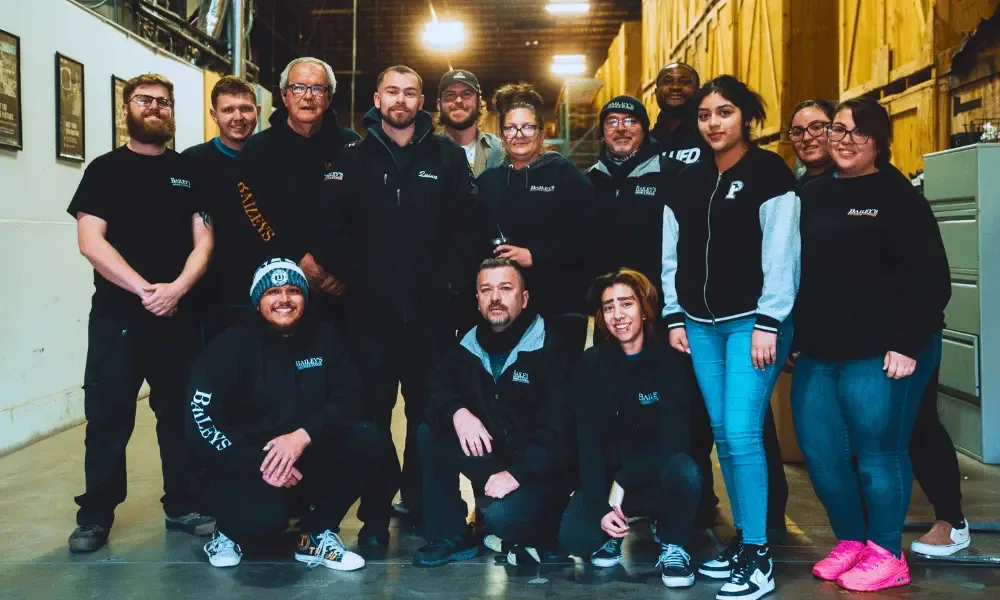
By the time that call comes, the crew has already done a lot of work. "A successful move starts before the truck ever leaves the warehouse," Chad says. "We want our crews to know what they're walking into." Before rolling out, the crew reviews your job details, makes sure they have the equipment and materials your move needs, and goes over anything out of the ordinary. The driver is responsible for making sure the truck is safe and loaded with everything that specific job calls for. When the truck pulls up, the crew sizes up the situation before touching anything: where they can safely park, how items will get in and out, and any obstacles or access issues they'll need to work around. "The goal is to have a plan in place before we start moving anything."
What do movers do when they arrive?
The first thing they do isn't lifting. The crew lead introduces the crew, talks with you, and walks through your home with you, room by room. You point out what's going, what's staying, where things are going, and anything that needs special care. The crew lead points out anything that could slow the day, like a tight stairwell or a couch that won't make the turn.
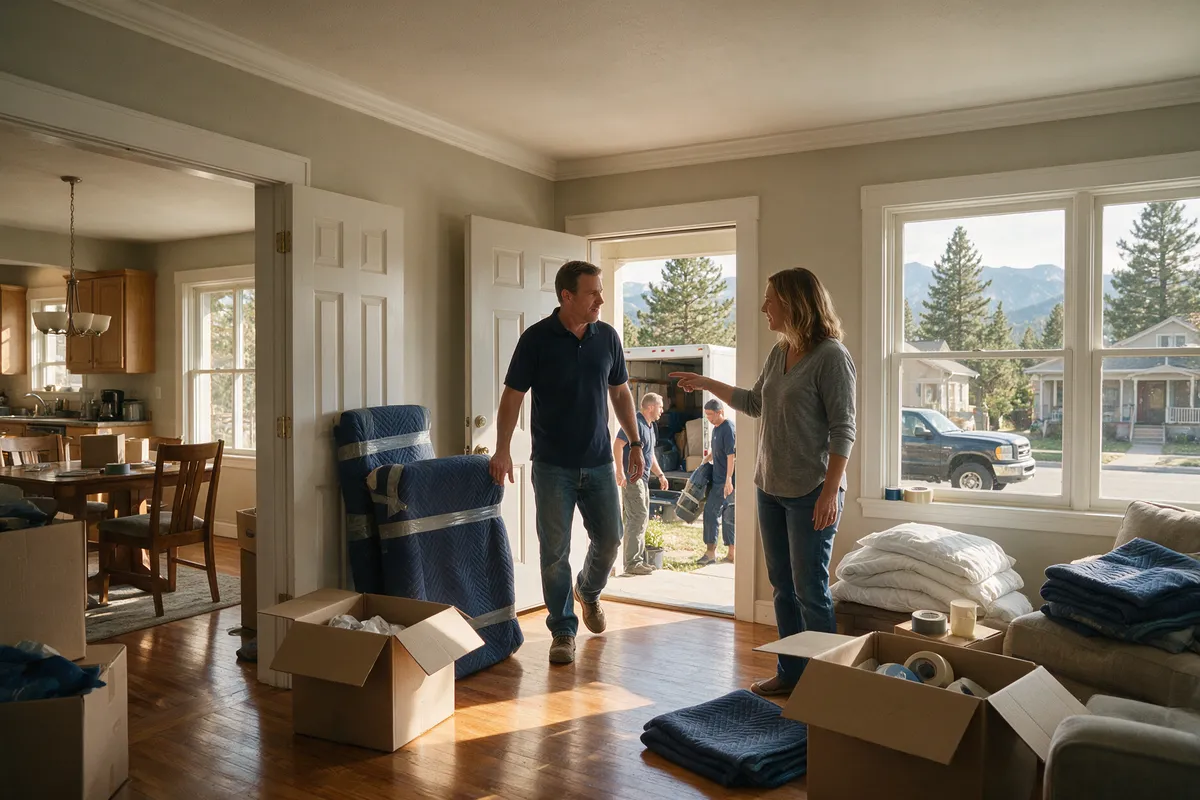
This walkthrough is where you set the plan. Ten minutes here keeps the next several hours calm.
Chad's one wish for every customer is simple. "If there is one thing I wish every customer had ready, it would be a clear understanding of what they want moved and what they don't," he says. "It sounds simple, but knowing that upfront can save a lot of time and confusion throughout the day."

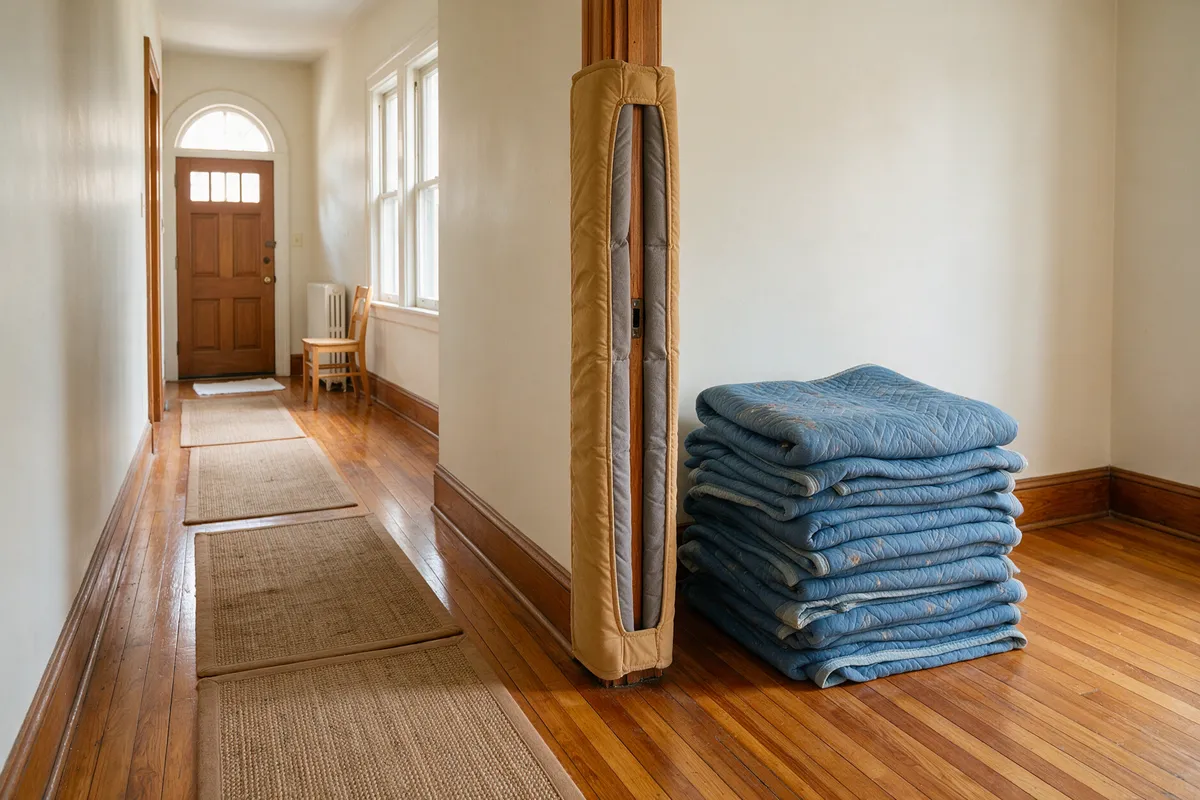
Next comes protection. Before furniture moves, the crew protects the path it will travel: floors, door frames, banisters and corners. We've written about how Bailey's Moving & Storage keeps crews from damaging your home, so we won't repeat it all here.

Crews look at the floors, doorways, stairs and any tight spots before anything moves. Depending on the home, that can mean floor runners, Ram Board (a heavy-duty temporary floor covering), door jamb protectors, or extra protection for walls and corners. Hardwood floors and new construction get extra attention, so the crew isn't tracking in dirt or scratching finished surfaces.
Do movers wrap and disassemble furniture?
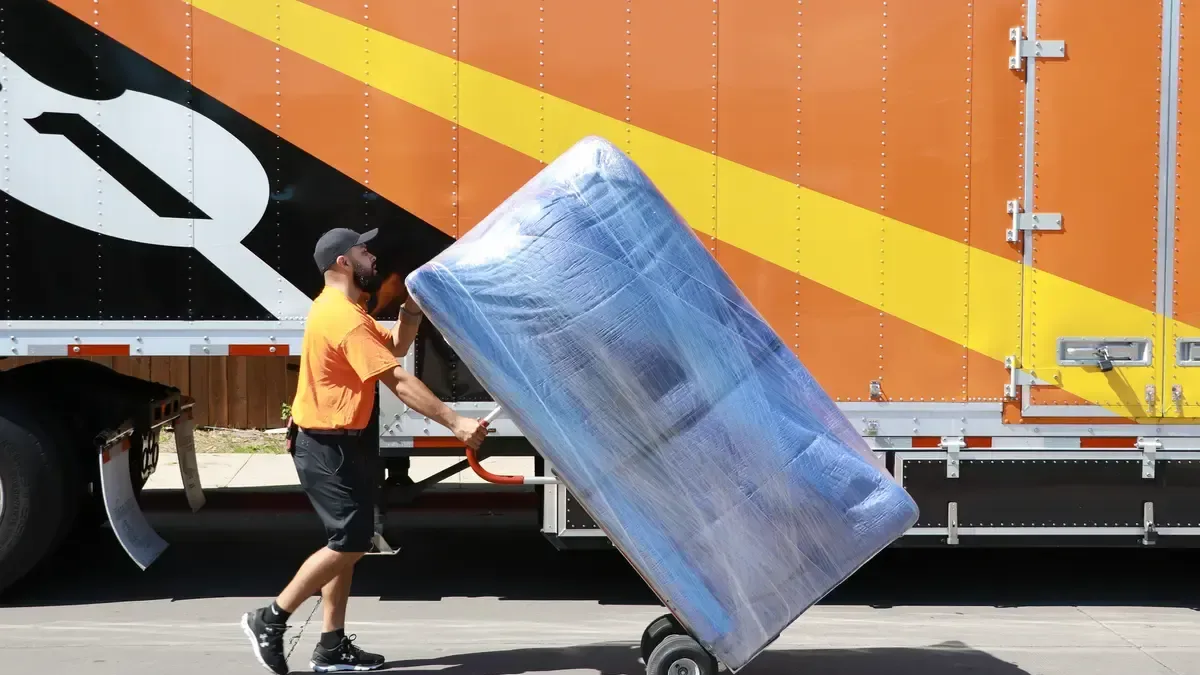
Yes. On a full-service move, the crew wraps furniture in moving pads for the ride, and adds stretch wrap or tape when it's needed to keep the padding secure. They also take apart pieces that won't travel safely in one piece. Beds and larger tables are the most common. Hardware goes into a parts box, so nothing gets lost and everything can go back together at your new home.
TVs get special handling. "Flat screen TVs need to be handled carefully because the screens are easily damaged by pressure or impact," Chad says. They're packed and protected properly, preferably in a TV carton that fits the screen, so the TV isn't bouncing around in the truck or taking pressure from other items.
A few things the crew won't move, such as hazardous materials. Federal rules for interstate moves list them (FMCSA, 49 CFR Part 375). The full list, plus what to pack yourself, is in how to prepare for movers. Whether a dresser can stay full depends on the dresser and how much is inside. "Clothing can add up quickly, and leaving everything inside can make a dresser too heavy or put stress on the frame," Chad says. Clothes and linens can sometimes stay, but anything other than clothes and linens should always be packed.
How do movers load the truck?
Loading is where experience shows. A truck is packed in a deliberate order, so weight is balanced and nothing shifts on the road. It isn't a race to fill space.
Chad puts it plainly: "Loading a truck is a lot more than just getting everything to fit. You have to think about weight distribution, protecting furniture, securing the load, and making sure things aren't going to shift while you're driving." Heavier items generally go toward the bottom, and the load is built to stay stable, protect furniture and use the space well. Boxes are stacked safely, with fragile ones kept away from pressure and heavier items. Mattresses and upholstered pieces are protected, and depending on the load, mattresses can go in the load itself or be used to help strap it off.
When a truck isn't loaded correctly, things can shift on the road, boxes can get crushed and furniture can get damaged. "That's why loading is such an important skill," Chad says. "A good crew knows how to make the load secure, not just how to fill the truck."
While the crew loads, you're free to do the things only you can do. That brings up a question we hear a lot.
What should you do while movers are moving?
Stay close and stay reachable. You don't need to carry anything. Your role is decisions, and the crew will come to you with them. "Does this go?" "Which bedroom is this?" "Is the garage shelf included?"
"Customers don't need to help us carry furniture. That's what we're there for," Chad says. The biggest help is a home that's ready: clear walkways, pets and children out of the work areas, and you available when the crew has a question. What slows a crew down is last-minute packing, not knowing what's supposed to go, or changing the plan once loading has started. "We understand that things come up, but the more we can figure out beforehand, the smoother the day will go."
Keep your essentials bag (keys, medications, chargers, documents) with you, not on the truck.
Before the truck pulls away, do one last pass through every room, closet and cabinet with the crew lead. An empty house is the easiest place to spot a forgotten box.
What happens on the drive and at the new home?
The driver heads to your new address, and you'll usually go ahead to meet the truck. On the Front Range, the drive isn't always simple. Downtown Denver parking, HOA elevator reservations, mountain grades and a sudden fall snow all shape the plan. If weather is a worry, read what to do if it snows on move day.
"Here in Colorado, we deal with a little bit of everything," Chad says. If something changes and the schedule or approach has to shift, the operations and customer service team works with the crew and with you to find the best option. "The biggest thing is keeping the customer informed and making sure we're always putting safety first."
At the new home, the crew protects floors and doorways again, then unloads. This is where you direct traffic. Stand where the crew can find you, and tell them which room each piece goes in.
On a local move, crews don't typically use a formal inventory, because the job is billed by time and materials rather than a piece-by-piece list. Labeling boxes by room — or putting a sign on each door — still matters on every move. It helps the crew place everything where it belongs and keeps the day moving.
Then comes reassembly. The crew puts back together anything they took apart, using the hardware from its parts box.
How long do movers take?
It depends on the size of the home, how much is packed, stairs and elevators, and the distance between homes. A small apartment and a four-bedroom house are very different days.
For a typical local move in the Denver area, Chad uses these as general estimates of total time on the job:
Typical local Denver job length (estimates)
| Home size | Typical time on the job |
|---|---|
| Studio / 1BR | 3–5 hours |
| 2BR | 4–7 hours |
| 3BR | 6–9 hours |
| 4BR+ | 8–12 hours or more |
Chad Tripp estimates; stairs, packing, access and distance can push a job longer.
Home size doesn't tell the whole story, though. "You can have a one bedroom apartment with a lot of belongings, stairs, and a long walk to the truck that takes longer than you'd expect," Chad says. "On the other hand, a larger home that's well prepared with easy access can go pretty smoothly." Packing, stairs, elevators, travel time, parking and the amount you're moving all make a difference.
Time and cost go together. Because local moves are usually billed by the hour, a faster, well-organized crew can cost less in total than a cheaper hourly rate with a slower crew. For what that adds up to, see what a local move in Denver really costs.
How does moving day end?
The crew finishes with a final walkthrough at the new home. Together you check that everything came off the truck and the furniture is where you want it. Many local moves also get a coordinator check-in call in the 2 to 4 p.m. range.
Then you'll review and sign the paperwork. Look it over before you sign, including any notes about damage. Full Value Protection, which has a cost, covers your belongings at a higher level than basic released value. Check current terms with your coordinator and on the Bailey's Moving & Storage claims page before you move. For more, see how to protect your move when hiring a full-service mover.
"I always recommend that customers take a few minutes to look everything over and bring up any questions or concerns before signing," Chad says. "Communication at the end of the move is just as important as it is at the beginning."
Tipping usually comes up here, too, and Chad's answer is simple: it's completely optional, and there's no set amount. "It's really up to them and how they feel the crew did," he says. As a rough guide, he says $20 to $100 per crew member can be reasonable depending on the size and difficulty of the move, but every job is different. Some customers hand the whole tip to the driver, and it's typically split evenly; others tip each crew member directly, and the amounts can vary. Cash isn't the only way to say thanks. Cold water or sports drinks go a long way, especially in summer, and lunch or a snack is always appreciated. If you had a great experience, a positive review that mentions the crew members by name is a great way to show it.
What does a good moving day look like, and what does a bad one?
A good moving day ends quietly. Your bed is made in the new house. Nothing is scratched. The bill matches what you were told to expect, and you know who to call if a question comes up next week.
A bad one usually goes wrong in familiar ways: a crew that shows up late without a call, furniture loaded unwrapped, or charges nobody mentioned. Those aren't just bad luck. Most of them come down to how a mover plans and trains.
For Chad, the difference between a great crew and an average one "comes down to attitude, communication, and accountability." A great crew takes care of your home, looks out for each other, speaks up when something comes up, and doesn't cut corners to finish faster. "Not every move is going to be easy. Sometimes access is difficult, things take longer than expected, or plans change. What matters is how the crew handles it," he says. "We want our customers to feel that we're taking ownership of the job and doing everything we can to make the experience a good one."
I was referred to Bailey's Moving & Storage by one of my co-workers. I'm glad I used them for our moving and storage. From the initial call to the day of the move everyone was very professional and easy to coordinate with. On the day of the move the crew was AWESOME! They took care of our furniture like it was their own from the breakdown to the wrapping! We couldn't be happier. We will definitely be recommending Bailey’s to anyone that we hear needs a reputable moving company.
Corey was a pleasure to work with. He showed up on schedule and coordinated the move without a hitch.
— Jim Tsurapas, Google review, September 9, 2026 (Denver, CO)
Your moving day, in three steps
- Prepare with the room-by-room checklist in the weeks before.
- Walk through your home with the crew lead when they arrive, and stay reachable for decisions.
- Finish with a final walkthrough at the new home before you sign.
Download the moving-day checklist
Do those three things, and moving day becomes a day you manage instead of one you survive.
Planning a move on the Front Range? Tell us about your move and we'll walk you through what your day will look like.
Frequently Asked Questions
What do movers do on moving day?
A full-service crew from Bailey's Moving & Storage protects your home, wraps and disassembles furniture, loads the truck, drives to your new home, then unloads, reassembles and places everything. You make the decisions; the crew does the lifting.
How long do movers take for a local move?
It depends on home size, stairs, packing and distance. For a typical local Denver move, Bailey's Moving & Storage Operations Manager Chad Tripp estimates about 3 to 5 hours for a studio or one bedroom, 4 to 7 hours for two bedrooms, 6 to 9 hours for three, and 8 to 12 hours or more for four bedrooms or larger. Ask your coordinator for an estimate based on your home.
Do movers disassemble furniture?
Yes. On a full-service move, the crew takes apart pieces that won't travel safely in one piece, like beds and larger tables, keeps the hardware together in a parts box, and reassembles them at your new home.
Do movers wrap furniture?
Yes. Full-service crews wrap furniture in moving pads, with stretch wrap or tape where needed to hold the pads in place, and protect floors and doorways before carrying anything. Depending on the home, Bailey's Moving & Storage crews use floor runners, Ram Board, door jamb protectors and extra wall and corner protection.
Should you help the movers?
You don't need to carry anything. The most helpful thing you can do is stay reachable for decisions, keep pets and kids out of the path, and do the final walkthrough. Having your home ready, with packing done and walkways clear, helps the crew most.
How much should you tip movers?
Tipping is optional, and there's no set amount. Chad Tripp, Operations Manager at Bailey's Moving & Storage, says $20 to $100 per crew member can be reasonable depending on the size and difficulty of the move. Cold water or sports drinks, lunch or a snack, and a review that names the crew are appreciated too.
Sources
- Chad Tripp, Operations Manager, Bailey's Moving & Storage (Denver) — answers to our moving-day questions, by email, October 16, 2026. Quotes are his exact wording; job-length ranges and the tipping guide are his estimates.
- Bailey's Moving & Storage estimates for local and in-state moves, Oct 2025–Oct 2026 (cost line).
- Federal Motor Carrier Safety Administration, 49 CFR Part 375 (interstate moving rules).
- Jim Tsurapas, Google review of Bailey's Moving & Storage (Denver, CO), September 9, 2026.


